
Risotto
Fructans
Estimated from the ingredient list only. Portion sizes aren't considered, so check the Monash University FODMAP app or your dietitian before relying on this.
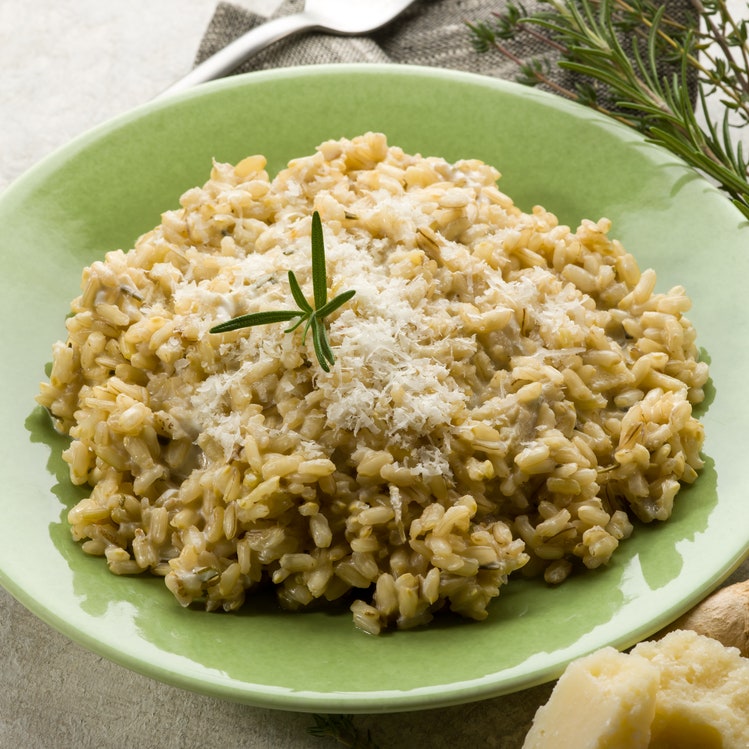
Risotto has become a staple dish in our household, due to its versatility, and simplicity. It is relatively easy to make if you have the right ingredients, and you can treat it…
Directions
- 1
Melt the butter in a small pot, and add the onion, sauteing until onion is soft, but not brown.
- 2
Add garlic and continue to saute for about 1-2 more minutes
- 3
Add the rice to the pan and stir continuously for about 1-2 minutes
- 4
Add the white wine to the pot to deglaze, stirring the rice until the wine is mostly absorbed.
- 5
Add the salt, pepper, and thyme and stir well until combined with the rice
- 6
Add the chicken stock approximately 1 cup at a time, waiting each time for the stock to be almost entirely absorbed before adding the next cup of stock
- 7
Once the last of the chicken stock is absorbed, add the reggiano parmesan and stir to combine with the rice.
- 8
Another great variation is to combine risotto with classic Italian Wedding Soup. Simply add the meatballs from our recipe (3-4 meatballs per serving), spinach (3-4 cups), and a teaspoon of lemon zest, and serve.
Diets
Fits as written
- Gluten-free
- Egg-free
- Nut-free
- Low-sodium
Works with easy swaps
Vegetarian (1)
- hot chicken stock → vegetable stock
Vegan (3)
- hot chicken stock → vegetable stock
- butter → plant-based butter
- reggiano parmesan finely grated → nutritional yeast
Pescatarian (1)
- hot chicken stock → vegetable stock
Dairy-free (2)
- butter → plant-based butter
- reggiano parmesan finely grated → nutritional yeast
Halal-friendly (1)
- dry white wine → stock with a squeeze of lemon juice
Mediterranean (1)
- butter → extra-virgin olive oil
Low FODMAP (3)
- small onion chopped fine → green tops of scallions or chives
- garlic → garlic-infused olive oil
- hot chicken stock → garlic- and onion-free stock
Some other ingredients are only low FODMAP in small portions.
How we decide
- Vegetarian:
- No meat, poultry, fish, shellfish or gelatin (including stock made from them).
- Vegan:
- Vegetarian, plus no dairy, eggs or honey.
- Pescatarian:
- No meat, poultry or gelatin; fish and shellfish are fine.
- Gluten-free:
- No wheat flour, pasta, bread, soy sauce, barley, rye, couscous, beer or oats (unless certified gluten-free).
- Dairy-free:
- No milk, butter, cream, yogurt, cheese or other dairy.
- Egg-free:
- No eggs, egg noodles or mayonnaise.
- Nut-free:
- No peanuts or tree nuts (almonds, walnuts, cashews, pistachios and so on).
- Low FODMAP:
- Rated from the ingredient list; see the Low FODMAP badge on each recipe.
- Halal-friendly:
- No pork products, alcohol or gelatin. This can't confirm halal sourcing.
- Paleo:
- No grains, legumes, dairy, refined sugar or seed oils.
- Mediterranean:
- No red or processed meat and no butter, lard, margarine or cream as cooking fats.
- Low-carb:
- About 20 g net carbs (carbs minus fiber) or less per serving, from the nutrition estimate.
- Keto:
- About 10 g net carbs or less per serving, with at least 55% of calories from fat.
- Atkins:
- About 10 g net carbs or less and 5 g sugar or less per serving.
- High-protein:
- 25 g protein or more per serving.
- Low-sodium:
- About 600 mg sodium or less per serving.
Based on the ingredient list and nutrition estimate only. Hidden ingredients in packaged foods, and cooking methods, aren't visible to us. Check labels, and for medical diets or allergies ask your doctor or dietitian.
Nutrition Facts
Per serving (6 servings)
- Protein
- 16.5 g
- Carbohydrates
- 51.8 g
- Sugars
- 0.6 g
- Fiber
- 0.9 g
- Fat
- 16.4 g
- Saturated fat
- 9.9 g
- Sodium
- 457 mg
Estimated from USDA ingredient data. Brands, substitutions and cooking methods will change the real numbers.
Have Leftover Chicken Stock?
Pairs Well With
Published January 1, 2023