
Classic Paella
Fructans
Estimated from the ingredient list only. Portion sizes aren't considered, so check the Monash University FODMAP app or your dietitian before relying on this.
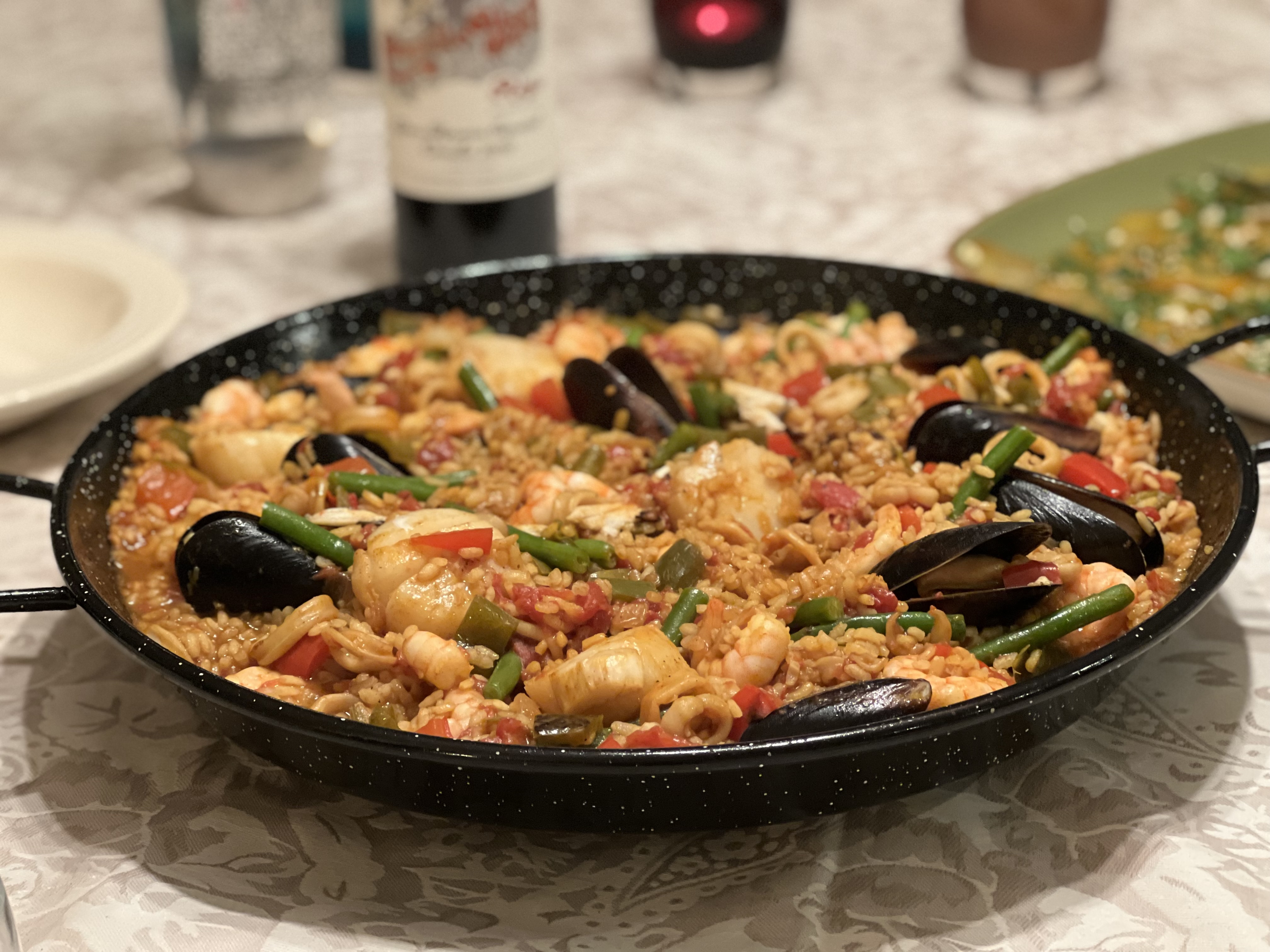
Directions
- 1
All ingredients should be open and measured before you start cooking.
- 2
Cut chicken into cubes and set aside.
- 3
Allow your 10" sauté pan to warm up over medium heat. This takes a couple minutes.
- 4
Add about 2 tablespoons olive oil and swirl it around your pan to evenly coat the bottom, and then add the onions and some of the salt, allow to caramelize slowly
- 5
Then add your peppers and allow to cook down with the onions. Allow the two to cook down into a "sofrito". Add more oil if the mixture becomes dry
- 6
Squeeze your tomato pieces of juice and add to the sofrito, allow to reduce and dry with the onions and peppers
- 7
Add a touch more oil, then add the minced garlic, smoked paprika and saffron and toast for 30 seconds. If your pan seems dry add more olive oil to help coat ingredients
- 8
Add the rice to the mixture and allow to toast lightly and increase the heat if necessary
- 9
Deglaze with white wine, cook for 30 seconds to one minute, to cook off the alcohol
- 10
Add a half a cup of the broth stir and allow the mixture to come to a simmer. Taste for seasoning. As that first addition of broth starts to absorb, add another ½ cup and stir.
- 11
This is the last time you get to stir, so put down your spoon. (stirring after this point will pull unwanted starches and leave you with a gummy pan of rice.)
- 12
Now you will drizzle in stock and shake the pan to distribute the stock. Cook the paella on fairly low heat, drizzling stock as the rice absorbs and continues to cook
- 13
About halfway through the cooking process add your diced chicken and tuck into the rice and allow everything to come back to a simmer. Your rice should have a layer of broth covering it at this point
- 14
If there isn't enough broth to cover your rice, add just enough broth to cover rice
- 15
Arrange the green beans on top of the paella in a star pattern and press into the rice surface
- 16
As the paella cooks, very slowly add the stock across the surface of the rice in small increments. You can taste the grains of rice to assess the doneness of the paella; make sure the paella is on a low temperature
- 17
Add sprigs) of rosemary to the top of your paella and let cook for about 5 minutes before reducing the heat a bit and top loosely with a piece of aluminum foil
- 18
As your paella is finishing cooking, you're not going to want to stir, but if you notice dry spots, add a few tablespoons of stock to them to allow your rice to finish cooking
- 19
To check for doneness, you'll need to eat a couple grains of rice as it finishes cooking. If it's still crunchy in the middle, you'll need to add broth to finish cooking
- 20
Once that last little bit of crunch has gone away, your paella should be done cooking. (If the paella seems wet, you can put the paella in a 400-degree oven with the light foil layer to finish drying the paella and even out the cooking (about 8 minutes)
- 21
If you desire a socarrat, go ahead and turn your burner up to high and cook the bottom for a couple minutes, moving the pan over the surface of the flame to dry and crisp the bottom of the paella
- 22
Optional: Garnish with the juice of a lemon across the top and some chopped parsley
Diets
Fits as written
- Gluten-free
- Dairy-free
- Egg-free
- Nut-free
- Mediterranean
Works with easy swaps
Halal-friendly (1)
- white wine → stock with a squeeze of lemon juice
Paleo (1)
- Matiz bomba rice or another short- or medium-grain Spanish rice → cauliflower rice
Low FODMAP (3)
- yellow onion → green tops of scallions or chives
- garlic → garlic-infused olive oil
- Roughly 2-3 cups chicken stock → garlic- and onion-free stock
Some other ingredients are only low FODMAP in small portions.
How we decide
- Vegetarian:
- No meat, poultry, fish, shellfish or gelatin (including stock made from them).
- Vegan:
- Vegetarian, plus no dairy, eggs or honey.
- Pescatarian:
- No meat, poultry or gelatin; fish and shellfish are fine.
- Gluten-free:
- No wheat flour, pasta, bread, soy sauce, barley, rye, couscous, beer or oats (unless certified gluten-free).
- Dairy-free:
- No milk, butter, cream, yogurt, cheese or other dairy.
- Egg-free:
- No eggs, egg noodles or mayonnaise.
- Nut-free:
- No peanuts or tree nuts (almonds, walnuts, cashews, pistachios and so on).
- Low FODMAP:
- Rated from the ingredient list; see the Low FODMAP badge on each recipe.
- Halal-friendly:
- No pork products, alcohol or gelatin. This can't confirm halal sourcing.
- Paleo:
- No grains, legumes, dairy, refined sugar or seed oils.
- Mediterranean:
- No red or processed meat and no butter, lard, margarine or cream as cooking fats.
- Low-carb:
- About 20 g net carbs (carbs minus fiber) or less per serving, from the nutrition estimate.
- Keto:
- About 10 g net carbs or less per serving, with at least 55% of calories from fat.
- Atkins:
- About 10 g net carbs or less and 5 g sugar or less per serving.
- High-protein:
- 25 g protein or more per serving.
- Low-sodium:
- About 600 mg sodium or less per serving.
Based on the ingredient list and nutrition estimate only. Hidden ingredients in packaged foods, and cooking methods, aren't visible to us. Check labels, and for medical diets or allergies ask your doctor or dietitian.
Nutrition Facts
Per serving (about 3 servings; serving size estimated)
- Protein
- 6.1 g
- Carbohydrates
- 58.2 g
- Sugars
- 4.2 g
- Fiber
- 3.9 g
- Fat
- 23.5 g
- Saturated fat
- 3.3 g
- Sodium
- 193 mg
Estimated from USDA ingredient data. Brands, substitutions and cooking methods will change the real numbers.
Some ingredients couldn't be included, so this may be low.
Have Leftover Chicken Stock?
Pairs Well With
Published April 16, 2022