
Moroccan Cauliflower and Couscous Salad
Fructans · GOS · Excess fructose · Polyols
Estimated from the ingredient list only. Portion sizes aren't considered, so check the Monash University FODMAP app or your dietitian before relying on this.
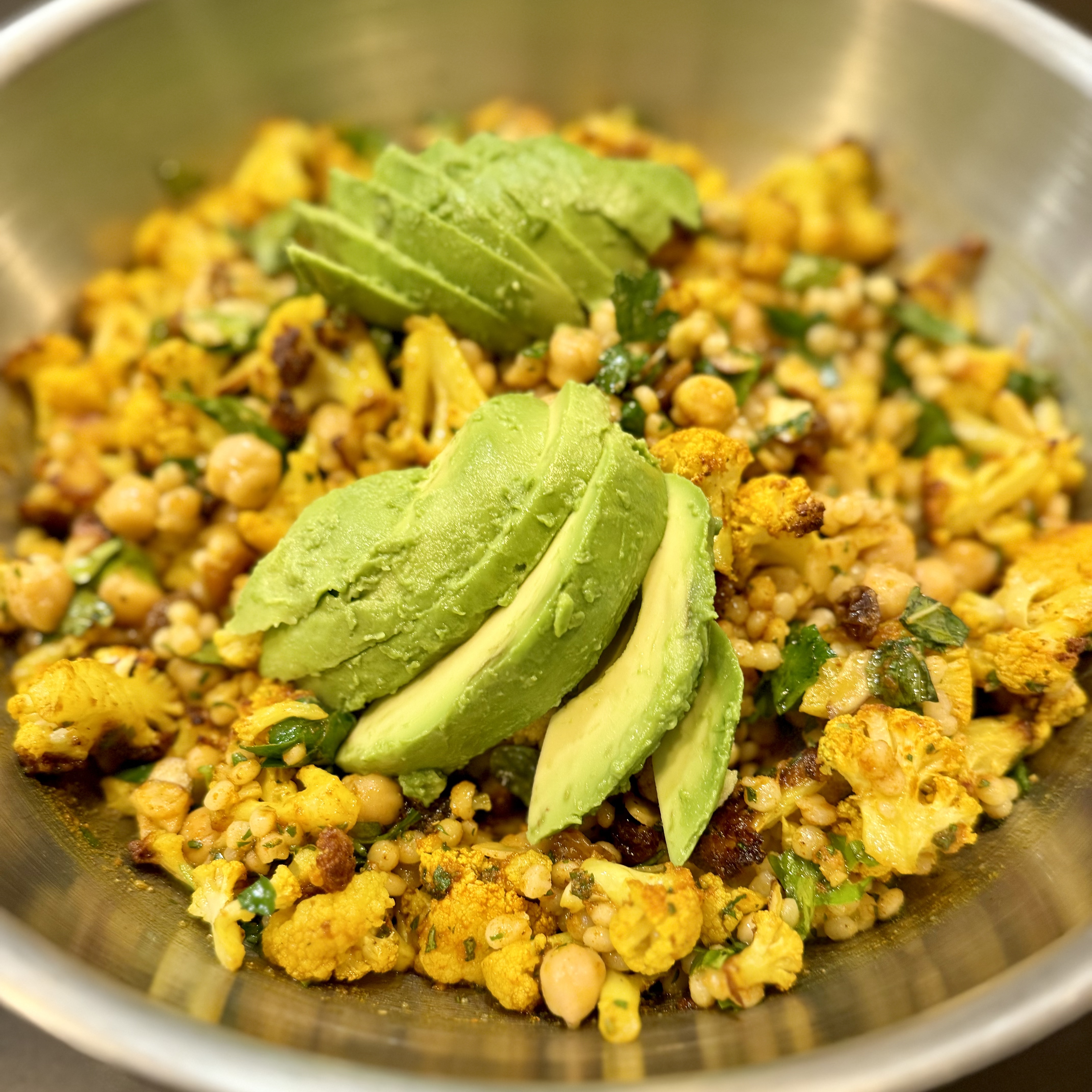
This Moroccan Cauliflower and Couscous Salad is bursting with flavors from the spices - coriander, turmeric, and paprika, and the combination of cauliflower, couscous, almonds,…
Directions
- 1
Heat oven to 425ºF and set a large rimmed baking sheet on the middle rack. In a large bowl, toss cauliflower with 3 Tbsp. olive oil, coriander, turmeric, ½ tsp. of salt, and black pepper. Transfer to the hot baking sheet, spread in an even layer, and roast until crisp-tender and browned in spots, about 25 to 30 minutes, tossing once halfway through.*No need to clean the bowl - you'll use it again to mix the salad ingredients.
- 2
Bring 1 ½ cups water to a boil in a medium (2-quart) saucepan. Add the couscous and the remaining ½ tsp. salt, return to a boil, then cover and reduce the heat to a simmer. Let cook until the liquid is absorbed, about 15 minutes. Drain any excess water, and stir in chickpeas.
- 3
Prepare Lemony Paprika Dressing - in a small bowl, combine parsley, lemon juice, garlic, paprika, cumin, and salt. Gradually stream in olive oil, whisking constantly with a fork, until combined. In the same bowl, you used to season the cauliflower, add couscous and chickpea mixture, along with roasted cauliflower, almonds, raisins, mint, and parsley. Add dressing and toss to combine. Enjoy warm, chilled, or closer to room temperature.
Diets
Fits as written
- Vegetarian
- Vegan
- Pescatarian
- Dairy-free
- Egg-free
- Halal-friendly
- Mediterranean
- Low-sodium
Works with easy swaps
Gluten-free (1)
- uncooked pearl couscous → quinoa
Nut-free (1)
- sliced almonds → sunflower or pumpkin seeds
Low FODMAP (3)
- medium head cauliflower → broccoli florets (heads only)
- uncooked pearl couscous → quinoa or brown rice
- grated → garlic-infused olive oil
Some other ingredients are only low FODMAP in small portions.
How we decide
- Vegetarian:
- No meat, poultry, fish, shellfish or gelatin (including stock made from them).
- Vegan:
- Vegetarian, plus no dairy, eggs or honey.
- Pescatarian:
- No meat, poultry or gelatin; fish and shellfish are fine.
- Gluten-free:
- No wheat flour, pasta, bread, soy sauce, barley, rye, couscous, beer or oats (unless certified gluten-free).
- Dairy-free:
- No milk, butter, cream, yogurt, cheese or other dairy.
- Egg-free:
- No eggs, egg noodles or mayonnaise.
- Nut-free:
- No peanuts or tree nuts (almonds, walnuts, cashews, pistachios and so on).
- Low FODMAP:
- Rated from the ingredient list; see the Low FODMAP badge on each recipe.
- Halal-friendly:
- No pork products, alcohol or gelatin. This can't confirm halal sourcing.
- Paleo:
- No grains, legumes, dairy, refined sugar or seed oils.
- Mediterranean:
- No red or processed meat and no butter, lard, margarine or cream as cooking fats.
- Low-carb:
- About 20 g net carbs (carbs minus fiber) or less per serving, from the nutrition estimate.
- Keto:
- About 10 g net carbs or less per serving, with at least 55% of calories from fat.
- Atkins:
- About 10 g net carbs or less and 5 g sugar or less per serving.
- High-protein:
- 25 g protein or more per serving.
- Low-sodium:
- About 600 mg sodium or less per serving.
Based on the ingredient list and nutrition estimate only. Hidden ingredients in packaged foods, and cooking methods, aren't visible to us. Check labels, and for medical diets or allergies ask your doctor or dietitian.
Nutrition Facts
Per serving (6 servings)
- Protein
- 13 g
- Carbohydrates
- 52.6 g
- Sugars
- 9.4 g
- Fiber
- 11.8 g
- Fat
- 29.8 g
- Saturated fat
- 4 g
- Sodium
- 479 mg
Estimated from USDA ingredient data. Brands, substitutions and cooking methods will change the real numbers.
A Fork in the Road
Slice and avocado and add to the top after dressing for an extra layer of freshness and smoothness.
Pairs Well With
Published February 23, 2024
Recipe Credit: Dishing Out Health