
Gougères
Lactose
Estimated from the ingredient list only. Portion sizes aren't considered, so check the Monash University FODMAP app or your dietitian before relying on this.
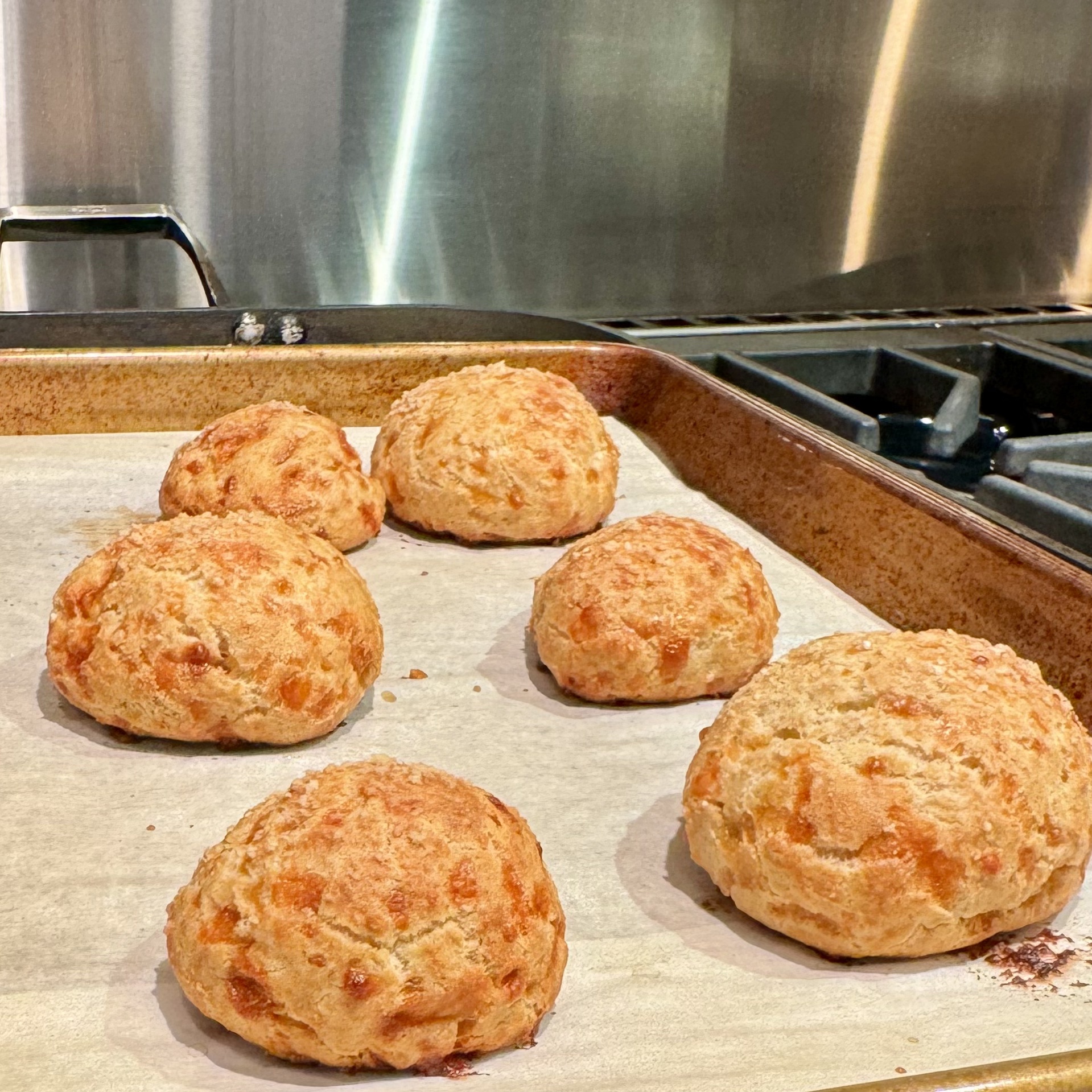
A gougère, in French cuisine, is a baked savory pastry made of choux dough mixed with cheese. There are many variants. The cheese is commonly grated Gruyère, Comté, or Emmentaler,…
Directions
- 1
Preheat the oven to 450 degrees and line two baking sheets with parchment paper.
- 2
Combine the water, milk, butter, salt, pepper, cayenne, and sugar in a medium saucepan set over medium heat and cook until the butter melts, 1-2 minutes.
- 3
Immediately add in the flour and stir until a dough ball forms and pulls away from the sides of the pot. Continue stirring until the dough is no longer sticky.
- 4
Stir for another minute or so, until the dough is smooth and glossy. If the batter is too loose when you begin incorporating the eggs, the dough will not puff properly in the oven.
- 5
Transfer to a bowl and allow the dough to cool for 1-2 minutes. Add the eggs, one at a time, fully incorporating each one before adding another. Scrape down the bowl each time and check the consistency of the paste. It should be stiff enough to stand, but soft enough to spread. Add the cheese and stir to combine.
- 6
Scoop 2 tablespoons of dough, roll them into balls (approximately 1 inch across) of the dough, and place the balls on the baking sheets. Sprinkle with finely grated Parmigiano Reggiano.
- 7
Bake for 5 minutes; rotate the pans from front-to-back and top-to-bottom, then reduce the heat to 350 and cook for another 15 minutes, or until the puffs are golden and crisp (ovens may vary, so begin checking them after 10 minutes).
Diets
Fits as written
- Vegetarian
- Pescatarian
- Nut-free
- Halal-friendly
- Low-carb
- Low-sodium
Works with easy swaps
Gluten-free (1)
- all-purpose or bread flour → gluten-free all-purpose flour blend
Dairy-free (4)
- milk → unsweetened plant milk (oat, soy or almond)
- unsalted butter → plant-based butter
- grated or shredded cheese → nutritional yeast
- Finely grated Parmigiano Reggiano to sprinkle on top → nutritional yeast
Low FODMAP (1)
- milk → lactose-free milk
Some other ingredients are only low FODMAP in small portions.
How we decide
- Vegetarian:
- No meat, poultry, fish, shellfish or gelatin (including stock made from them).
- Vegan:
- Vegetarian, plus no dairy, eggs or honey.
- Pescatarian:
- No meat, poultry or gelatin; fish and shellfish are fine.
- Gluten-free:
- No wheat flour, pasta, bread, soy sauce, barley, rye, couscous, beer or oats (unless certified gluten-free).
- Dairy-free:
- No milk, butter, cream, yogurt, cheese or other dairy.
- Egg-free:
- No eggs, egg noodles or mayonnaise.
- Nut-free:
- No peanuts or tree nuts (almonds, walnuts, cashews, pistachios and so on).
- Low FODMAP:
- Rated from the ingredient list; see the Low FODMAP badge on each recipe.
- Halal-friendly:
- No pork products, alcohol or gelatin. This can't confirm halal sourcing.
- Paleo:
- No grains, legumes, dairy, refined sugar or seed oils.
- Mediterranean:
- No red or processed meat and no butter, lard, margarine or cream as cooking fats.
- Low-carb:
- About 20 g net carbs (carbs minus fiber) or less per serving, from the nutrition estimate.
- Keto:
- About 10 g net carbs or less per serving, with at least 55% of calories from fat.
- Atkins:
- About 10 g net carbs or less and 5 g sugar or less per serving.
- High-protein:
- 25 g protein or more per serving.
- Low-sodium:
- About 600 mg sodium or less per serving.
Based on the ingredient list and nutrition estimate only. Hidden ingredients in packaged foods, and cooking methods, aren't visible to us. Check labels, and for medical diets or allergies ask your doctor or dietitian.
Nutrition Facts
Per serving (about 7 servings; serving size estimated)
- Protein
- 12 g
- Carbohydrates
- 16.3 g
- Sugars
- 1.3 g
- Fiber
- 0.5 g
- Fat
- 19.7 g
- Saturated fat
- 10.8 g
- Sodium
- 372 mg
Estimated from USDA ingredient data. Brands, substitutions and cooking methods will change the real numbers.
A Fork in the Road
the dough balls freeze well, and they can go right into the oven and cook as described above. You should also feel free to experiment with your favorite cheese. Many Gougeres recipes recommend gruyere cheese, but we are not big gruyere fans in our house, and both Parmigiano and Pecorino are dryer than gruyere and therefore add less moisture to the dough helping it maintain its shape and not flatten in the oven. Also, both Parmigiano and Pecorino are saltier than gruyere which means you can back off on the salt added if you are sensitive to adding too much salt to your recipes.
Pairs Well With

Published November 16, 2023